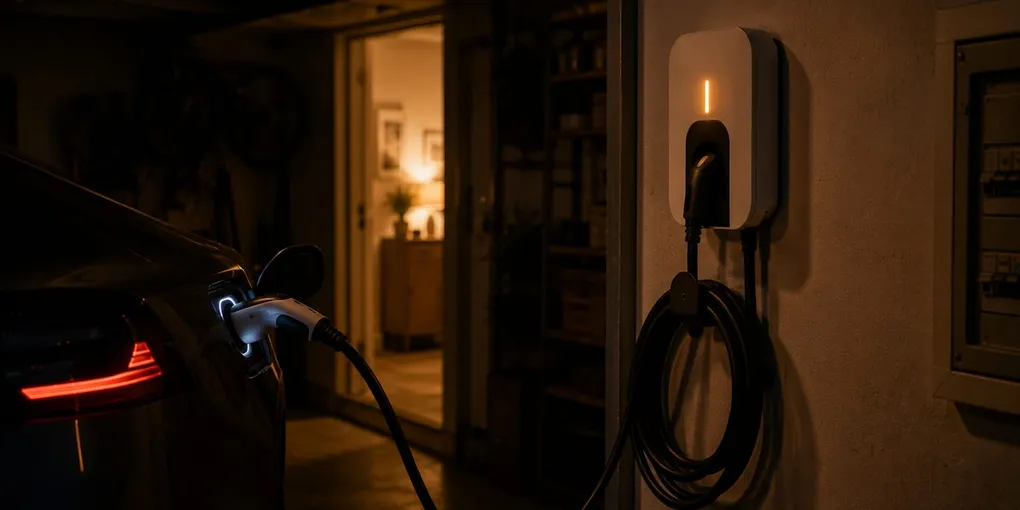
7.4 vs 11 vs 22 kW: How Much Charger Power You Actually Need (Single- or Three-Phase)
There is a showroom line that gets repeated like gospel: “get the 22 kW one, it charges way faster.” It sounds airtight — more power, less waiting — which is exactly why so many people fall for it. The trouble is that it is almost always wrong. The speed your car charges at home is not set by the charger on the wall; it is set by the onboard charger inside the car — and most cars cap their AC charging at 7.4 or 11 kW, so plugging them into a 22 kW unit adds not a single mile per hour. You would be paying for power the car simply refuses to accept.
The right question is never “what is the highest power available.” It is “how much can my car actually take, and how much will my electrical service let me deliver.” Nail those two numbers and the choice almost makes itself.
The bottleneck lives inside the car, not on the wall
Every EV carries a component almost nobody checks: the onboard charger (the OBC). It converts the alternating current from your home into the direct current the battery drinks, and it has a ceiling. That ceiling is what rules when you charge at home.
Plenty of small and midsize EVs ship with a 7.4 kW onboard charger. A good number of higher-trim models step up to 11 kW. And only a rare handful accept a full 22 kW on AC. If your car is in the first group and you bolt a 22 kW charger to the wall, it will charge exactly as fast as a 7.4 kW one would — the surplus just sits there, unused.
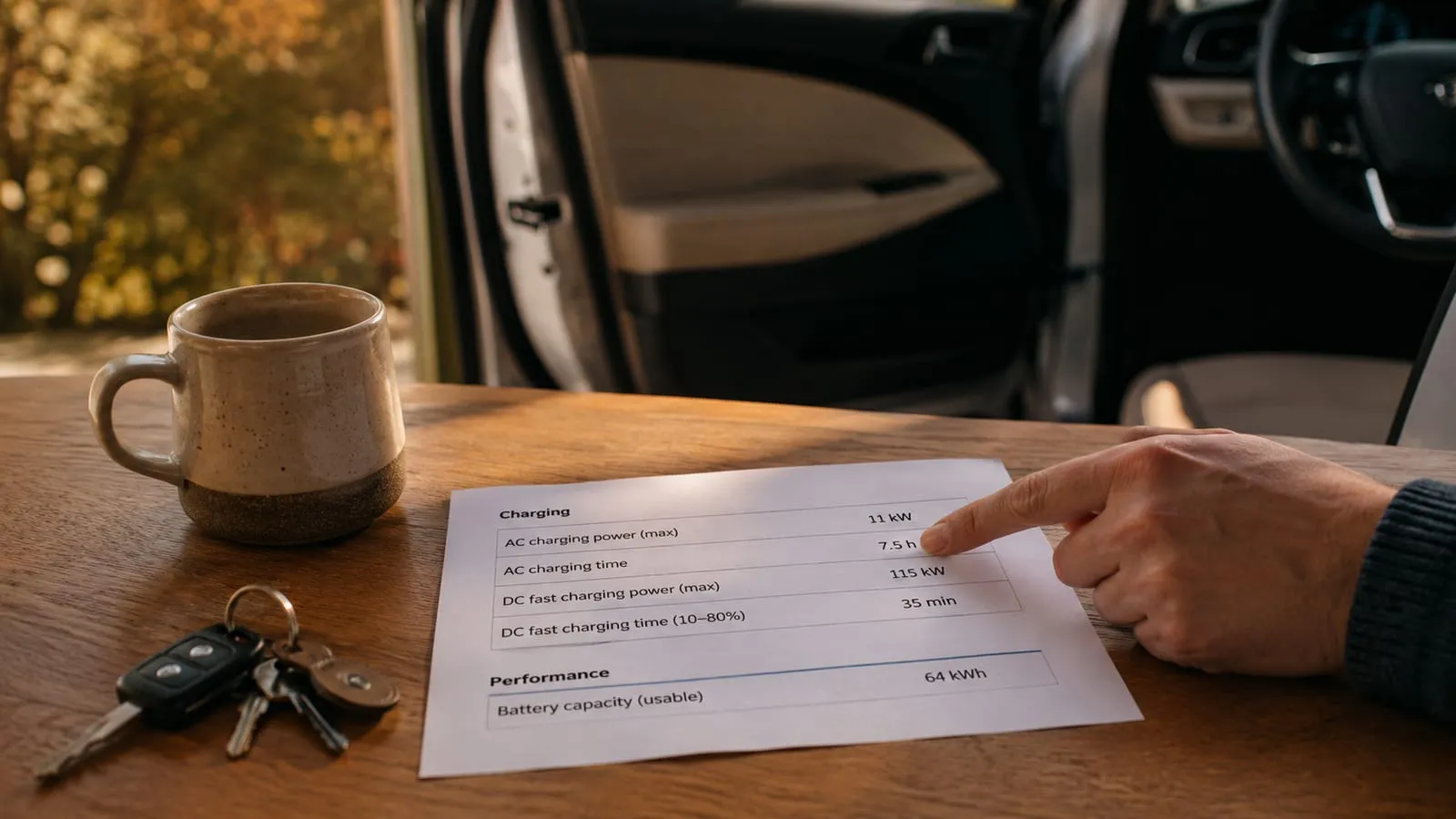
Which brings up the most money-saving habit in this whole piece: before you buy anything, open the car’s spec sheet and find its maximum AC charging power. Not the DC fast-charging figure — that one is for highway stations — but the AC number. That figure is your real ceiling. Buying above it is burning cash.
Single-phase or three-phase: what it hinges on
The other half of the equation is your service. And here a physical detail rules: to go past 7.4 kW, you have to make the jump to three-phase power — which in most homes means higher amperage and a heavier circuit.
- 3.7 and 7.4 kW are single-phase. They run off the service almost any home already has, typically on a dedicated 240-volt circuit.
- 11 and 22 kW are three-phase. They need three-phase power reaching the property, which the vast majority of homes do not have from the utility.
The technical floor for charging is 6 amps, which works out to roughly 1.38 kW single-phase or about 4.14 kW three-phase. Below that, no charger will modulate.
This is where the panel matters. A Level 2 home charger lives on its own dedicated circuit sized to the 125 percent continuous-load rule, and a 200-amp panel only has so much headroom. A 7.4 kW charger pulling hard already draws a serious chunk; if the heat pump or the range kicks in at the same moment, something has to give. That is why many 7.4 and 11 kW installs pair with load management instead of a panel upgrade. For a US home, three-phase service is unusual enough that 7.4 kW single-phase is, in practice, the ceiling most people ever meet.
The table that settles the decision
Turning kilowatts into something you can feel helps a lot: what actually matters is how many miles you wake up to. At a reference consumption of 25-30 kWh per 100 miles and an overnight window of about 8 hours, the math shakes out like this. Look less at the power column and more at the two on the right — those are the ones that decide.
| Power | Phases | Miles added overnight (~8 h) | When it makes sense |
|---|---|---|---|
| 3.7 kW | Single-phase | ~100-115 mi | Few miles/day, second home, tight budget |
| 7.4 kW | Single-phase | ~200-230 mi | The home standard: covers overnight charging for 90% of cases |
| 11 kW | Three-phase | ~300-345 mi | Cars with an 11 kW OBC, two cars, or wanting margin |
| 22 kW | Three-phase | ~610-690 mi (only if the car accepts it) | Almost nobody at home: only cars that take 22 kW on AC |
The reading is the myth spelled out. A 7.4 kW single-phase charger puts back around 200-230 miles in a single night — far more than the overwhelming majority drives in a day. For normal use, that power is more than enough. The 22 kW row only changes anything if — and only if — your car accepts it; in every other case, that line is pure paperwork.
The mistakes that cost real money
Choosing power tends to trip people on the same three stones.
Buying too much “just in case.” The classic: the 22 kW charger for a car that charges at 11. You not only pay for the pricier three-phase hardware; you pay for a three-phase install you probably did not have, and that runs the bill up fast. All for power the car will never touch.
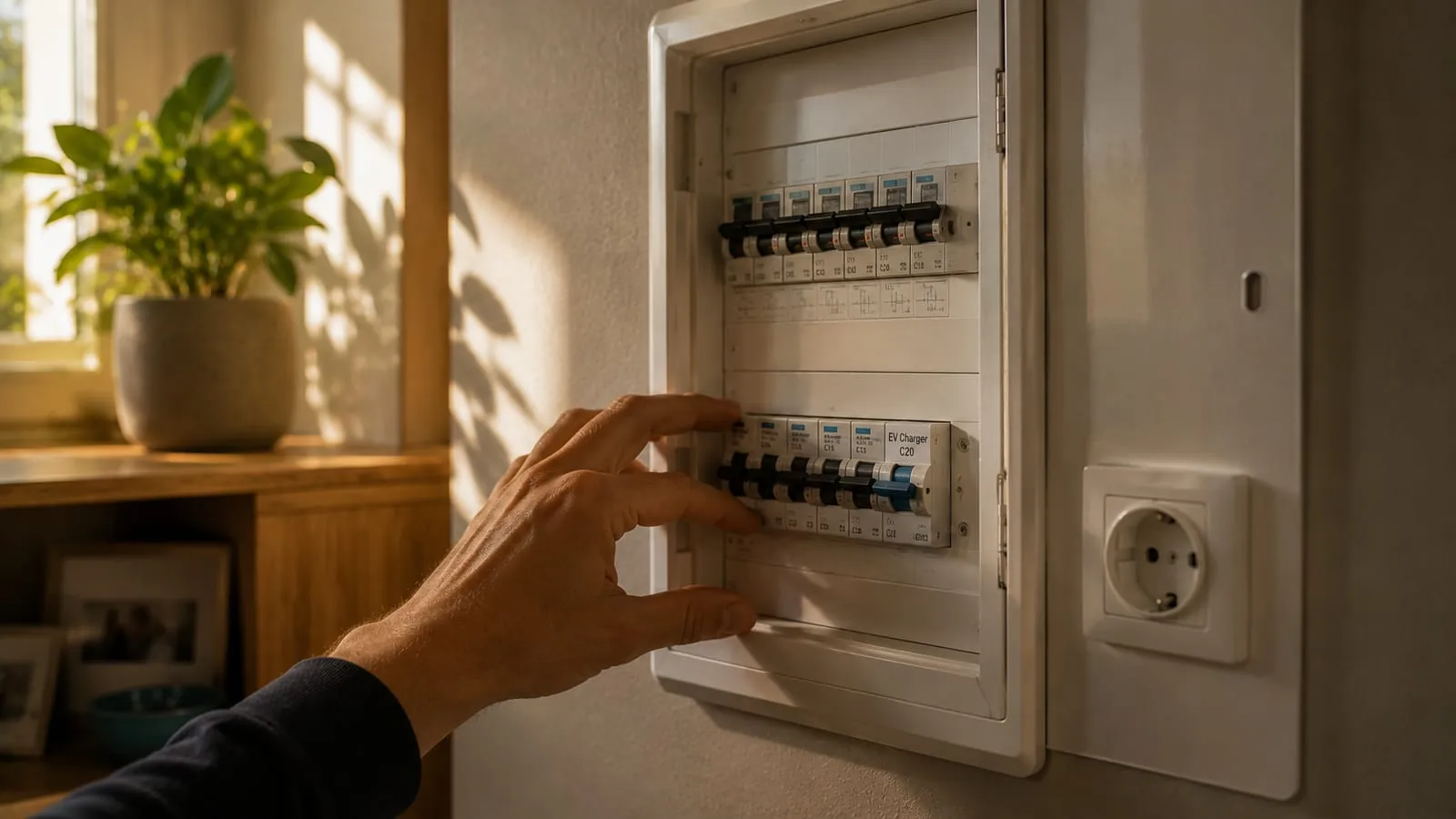
Buying too much without checking the panel. An 11 kW charger in a home with a maxed-out panel is a contradiction: you can never actually deliver those 11 kW without tripping the main. Either you upgrade the service — and pay more, forever — or you add load management. Before the charger’s power, look at your panel’s headroom.
Forgetting the heat pump and the range. When the car, the heat pump and an electric range all share a home, the power fights for room. The winner here is not whoever owns the beefiest charger, but whoever knows how to modulate it.
Those last two mistakes share one elegant fix: never touching the panel at all. It is worth seeing how a smart charger with dynamic load management splits the available power and lets the car coexist with the rest of the house.
So which one do I pick?
Boiled down: look at the car first, then the house.
If your car charges on AC at 7.4 kW — the most common case — a 7.4 kW single-phase charger is the right answer for almost everyone. It covers the night, forces no three-phase upgrade, and is cheaper to buy and to install. If your car accepts 11 kW and you have (or plan) three-phase, 11 kW gives you headroom for the future and a second car. Go for 22 kW only if your car takes it, which is rare. And in any case, you fine-tune the pick by comparing models: it helps to walk through how to choose a home EV charger without being swayed by the biggest number on the box.
Frequently asked questions
Does 22 kW charge the car faster than 7.4 or 11 kW?
Only if the car accepts it, and most do not. Home charging speed is capped by the vehicle’s onboard charger: if yours charges on AC at 7.4 or 11 kW, plugging it into a 22 kW unit adds no speed at all. The extra power goes unused. So before spending on 22 kW, confirm on the car’s spec sheet that it accepts that power on alternating current.
Do I need three-phase service to charge at home?
No, unless you want 11 or 22 kW. The 3.7 and 7.4 kW levels are single-phase and run off the service almost any home already has, on a dedicated 240-volt circuit. Three-phase is only needed for 11 kW and up, and above 22 kW it is mandatory. Since 7.4 kW covers most people’s overnight charging — and three-phase is rare in US homes — most households never need to touch it.
How many miles do I add overnight at 7.4 kW?
Around 200-230 miles in about eight hours, depending on the car’s consumption (25-30 kWh per 100 miles). That is well beyond what the vast majority drives in a day, which is why 7.4 kW is considered the home standard: you wake up with the battery ready without needing higher power.
Can I run an 11 kW charger with my current panel?
It depends on the panel. An 11 kW charger pulling hard needs real headroom above your other loads so it does not trip the main breaker. If your panel is tight, you either upgrade the service — paying more every month — or install a charger with dynamic load management, which throttles charging so it never exceeds what the panel can spare.
What happens when the car and the heat pump run together?
They compete for the same panel capacity. If the charger and the heat pump start at once, you can exceed the circuit’s limit and trip. The fix is not simply upgrading the service, but a charger with dynamic load management that shares the available power based on what the house is using at each moment, prioritizing and throttling the car’s charge.