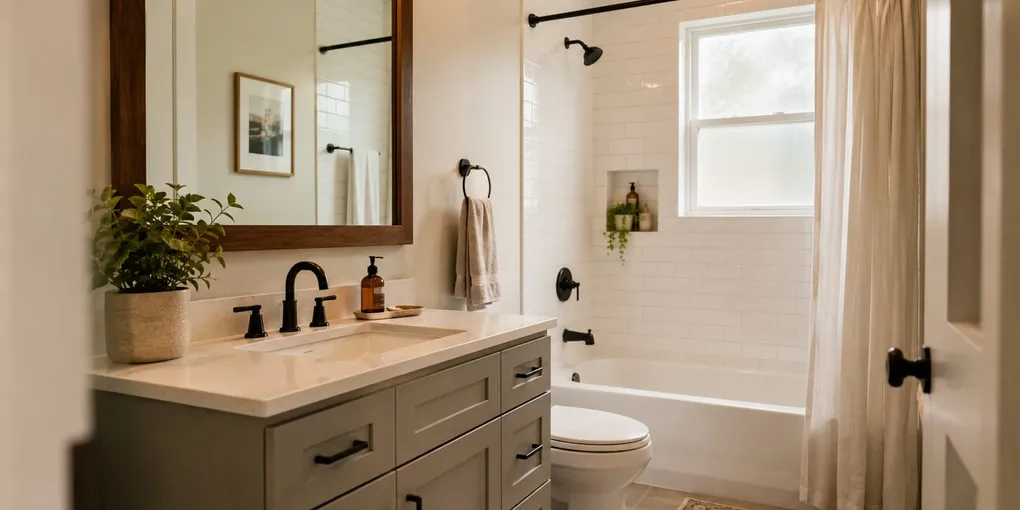
How Much Does a Bathroom Remodel Cost? Price Breakdown
The priciest square footage in your home isn’t the living room or the kitchen. It’s the bathroom — the one room where plumbing, waterproofing, tile, and fixtures all stack into the same few feet. That’s why the numbers surprise people. Most homeowners spend between $6,600 and $18,000 on a bathroom remodel, with a mid-range job landing around $10,000 — roughly $70 to $250 per square foot. Push into custom tile and a new layout and it can climb past $80,000. Below, we take it apart line by line: what moves the price, and where you can trim without regret.
Cost by item (mid-range full bath)
Here’s where the money actually goes in a mid-range full bath, item by item.
| Item | Typical cost (USD) |
|---|---|
| Demolition & debris removal | $500 – $2,000 |
| Plumbing (rework supply/drains) | $1,000 – $4,000 |
| Electrical (lighting, outlets, fan) | $500 – $2,000 |
| Waterproofing (walls/floor) | essential (don’t skip) |
| Tile & flooring | $1,500 – $6,000 |
| Fixtures (toilet, tub/shower, vanity) | $1,500 – $6,000 |
| Glass door / enclosure & faucets | $500 – $3,000 |
| Total (mid-range) | ~$10,000 |
Notice that tile and fixtures each carry as much weight as the plumbing — this is a room where the finishes cost as much as the guts behind them.
Cost by scope
The other way to size a budget is by how far you’re going, from a face-lift to a full gut.
| Scope | Typical cost (USD) |
|---|---|
| Cosmetic refresh | $70 – $120 / sq ft |
| Mid-range full remodel | $120 – $250 / sq ft |
| High-end / layout change | $250 / sq ft and up (can top $80,000) |
These are rough estimates and vary by region, materials and starting condition.
What drives the price
A few decisions do most of the moving. The biggest one is whether you leave the layout where it is.
- Size and whether you change the layout — moving the toilet or the drains means opening the floor and re-running pipe, and the plumbing bill climbs sharply.
- Material quality: premium tile and fixtures can double the budget on their own.
- Starting condition: old pipes, water damage, or hidden problems that only appear once the walls come off.
- A walk-in tiled shower vs a prefab unit, and how much tile work the design demands.
Remodel phases
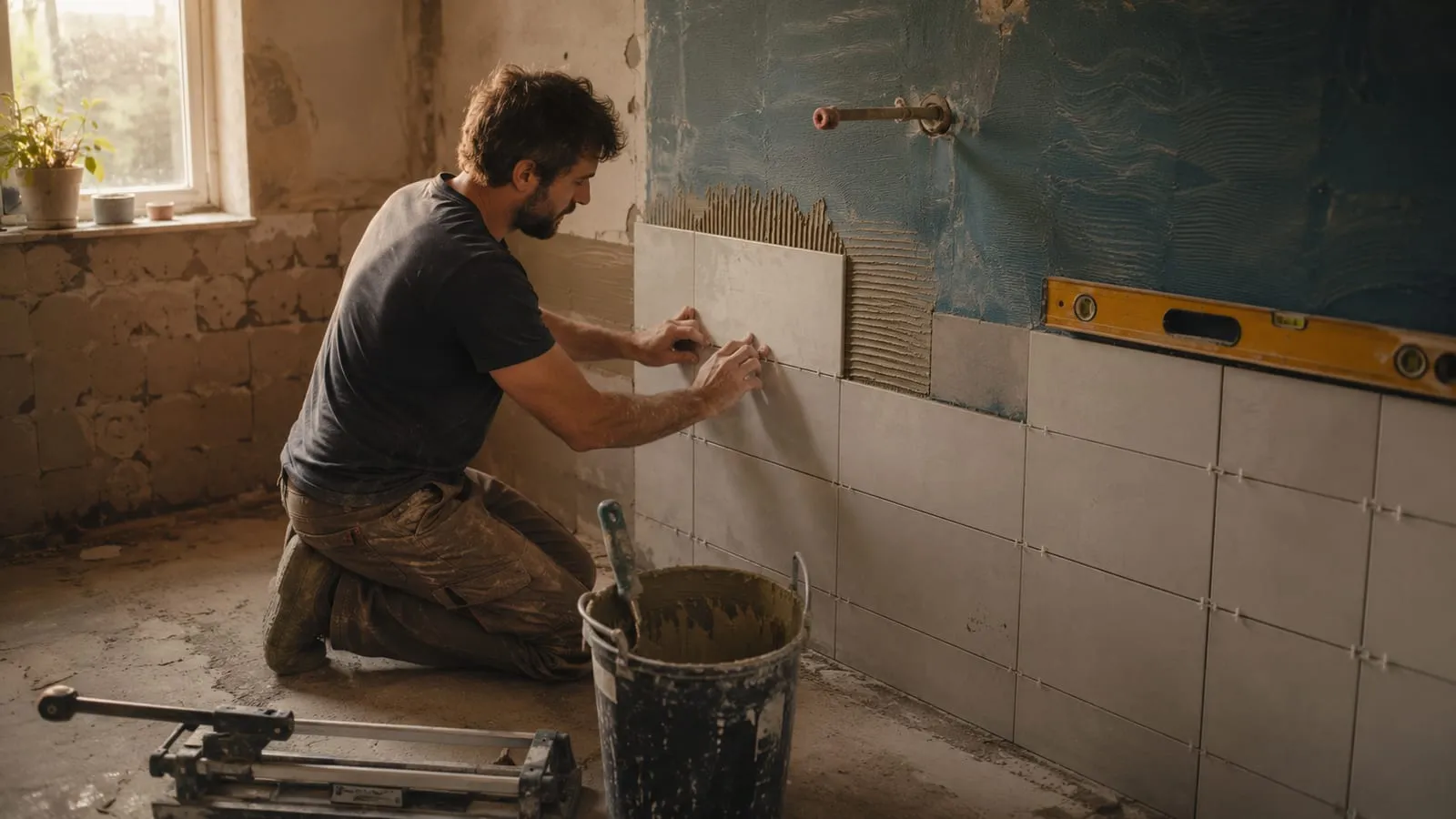
A remodel moves in a fixed order, and skipping a step to save a day almost always costs you later.
- Design, itemized quote and permits.
- Demolition and debris removal.
- Plumbing and electrical.
- Waterproofing of walls and floor.
- Tile and flooring.
- Fixtures, vanity and faucets.
- Glass, sealing and finishes.
Mistakes that blow the budget
The costliest mistakes are the ones you can’t see once the tile goes up — which is exactly why they get made.
- Skimping on waterproofing: the number-one cause of hidden leaks, rot, and repairs that cost more than the original job.
- Moving the layout (toilet or drains) when you don’t actually need to.
- Choosing on price alone with no itemized quote — the “cheap” bid is usually the one hiding line items.
- No contingency: set aside 15–20% for what’s waiting behind the walls.
- Buying fixtures or glass without checking dimensions and drain location first.
How to save without cutting corners
You can shave real money here — just take it from the finishes, never from what protects the room.
- Keep the layout so the plumbing stays put.
- Prefab shower instead of a custom tiled one.
- Tile the wet area only and reuse what’s still in good shape.
- Never cut waterproofing or plumbing — that’s the false economy that comes back.
Timeline
A standard bathroom remodel usually takes anywhere from 2–4 days to 2–3 weeks, depending on tile work and whatever the demo turns up.
Frequently asked questions
How much is a small bathroom remodel?
A small (35–40 sq ft) mid-range remodel typically runs $5,000–$9,000. The footprint is smaller, but the number of trades doesn’t shrink much — you still need plumbing, waterproofing, and tile.
Which item costs the most?
Tile/flooring and fixtures, alongside labor, which eats a large share of any bathroom total.
Do I need a permit?
Plumbing or electrical changes usually require one — check with your local building department before the work starts, not after.
Tub or shower?
A walk-in shower is more accessible and more in demand. If that swap is all you’re after, see our tub-to-shower conversion guide.
How do I avoid budget surprises?
Get an itemized quote that names specific materials, and hold a 15–20% contingency in reserve for the things nobody can quote until the walls are open.
If the bathroom is part of a bigger project, see the cost of a whole-house renovation per sq ft and of a kitchen remodel.