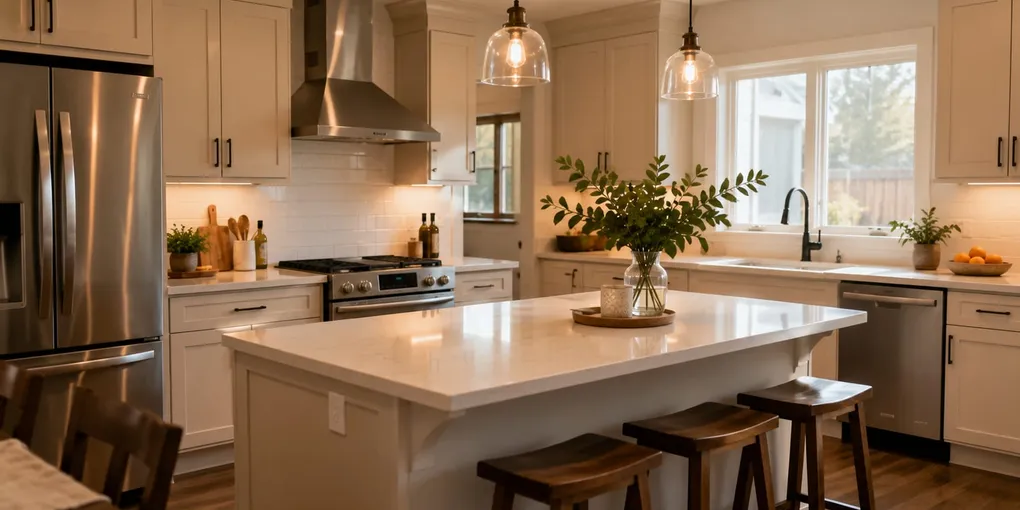
How Much Does It Cost to Remodel a Kitchen? Price Breakdown
Look at any kitchen estimate and two figures swallow most of it before you’ve picked a backsplash or a faucet. The cabinets (25–40% of the budget) and labor dominate a kitchen remodel — the rest is rounding by comparison. Add everything else in and a full remodel usually lands between $15,000 and $50,000 (about $150–$250 per square foot); a basic refresh starts near $4,000, and a full redesign runs past $50,000. So how much does it cost to remodel a kitchen, really? Below, we follow the money item by item and show you where it actually goes.
Cost by item
Start with the line items, and watch how much weight the top two carry.
| Item | Typical cost (USD) |
|---|---|
| Cabinets (replace) | $4,500 – $15,000 (custom $36,000+) |
| Countertops (replace) | $1,500 – $6,000 |
| Appliances (each, installed) | $200 – $3,700+ |
| Labor | $2,300 – $7,500 (15%+ of budget) |
| Demolition | $500 – $2,500 |
| Flooring, backsplash, paint, lighting | varies by scope |
Cabinets and labor together can eat half the budget before the countertop is even measured — which is why they’re the two numbers to pin down first.
Cost by tier
The other way to size the job is by tier, from a modest refresh to a high-end rebuild.
| Tier | Cost per sq ft | Typical total |
|---|---|---|
| Basic / small | $60 – $150 | $4,000 – $18,000 |
| Average / full | $150 – $250 | $15,000 – $50,000 |
| High-end / large | $250 – $350 | $50,000 – $70,000+ |
These are rough estimates and vary by region, materials and starting condition.
What drives the price
A handful of choices explain most of the spread between a $15,000 kitchen and a $50,000 one.
- Cabinet and countertop material: the single biggest jump — stock to custom, laminate to quartz.
- Appliance tier.
- Changing the layout — moving the sink, the water or gas lines, or the range hood — gets expensive fast.
- Size, an island versus a galley, and the condition of the systems already in the walls.
Remodel phases
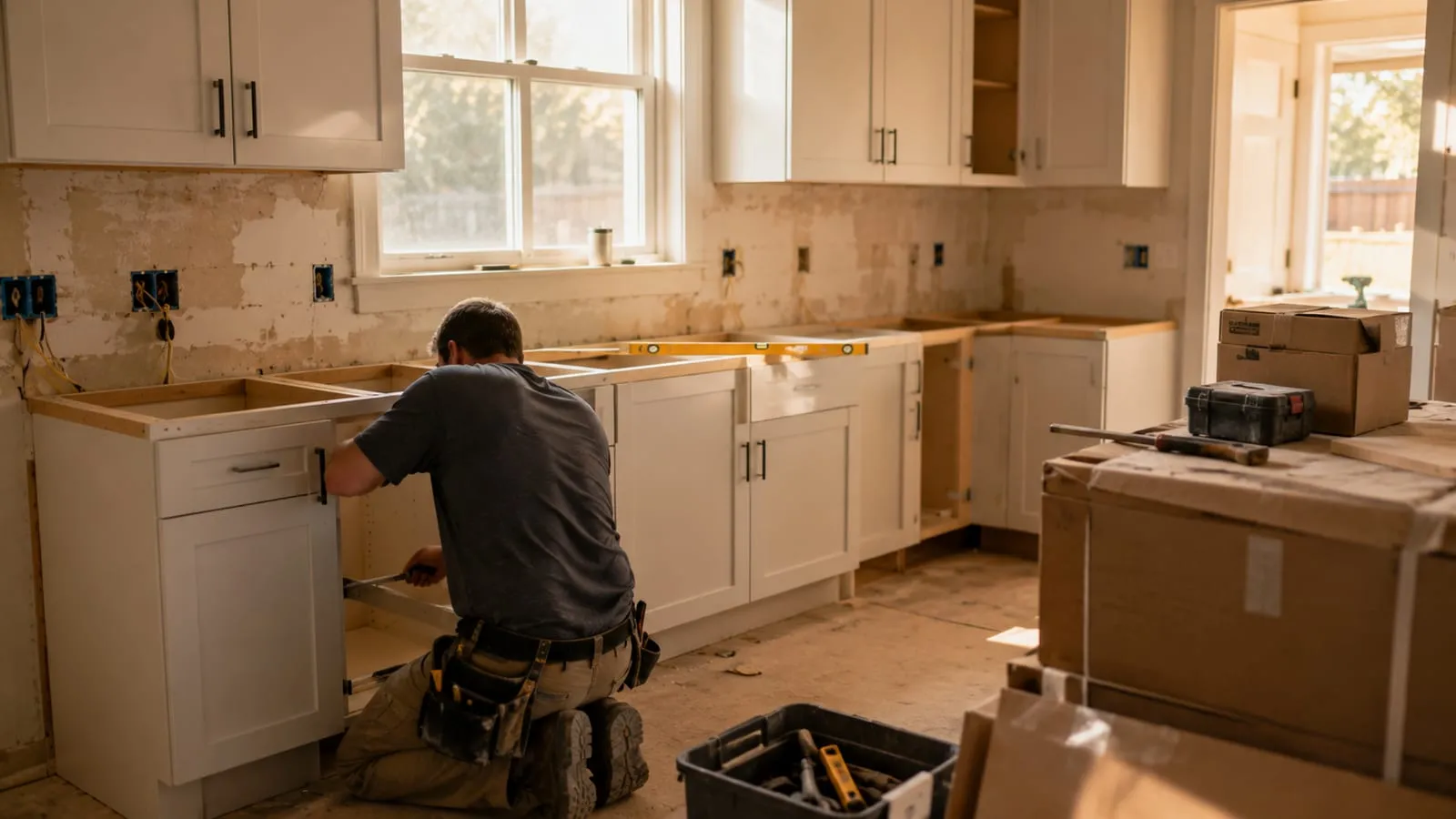
A kitchen goes together in a set sequence, and one step in particular can’t be rushed.
- Design, measurements and itemized quote.
- Demolition.
- Plumbing, electrical and venting.
- Flooring and backsplash.
- Cabinet installation.
- Countertop (templated only after the cabinets are set) and sink.
- Appliances, faucet and finishes.
Mistakes that blow the budget
Most kitchen overruns trace back to sequencing and measurement, not to splurging on nicer tile.
- Bad measurements or a poorly planned work triangle — cabinets that arrive and don’t fit.
- Ordering the countertop before the cabinets are installed, so the template’s off and you pay twice.
- Not coordinating the trades (plumber, electrician, installer) — the classic source of delays and overruns.
- Underestimating the range hood and venting.
- Cheap cabinets whose hinges and slides give out a year in.
- No contingency: hold 15–20% for the surprises.
How to save without cutting corners
Since cabinets and layout drive the total, that’s exactly where the smart savings live.
- Keep the layout so the sink and the water and gas lines stay put.
- Well-chosen stock cabinets instead of custom — for most kitchens the difference is cost, not quality.
- Quality laminate or solid-surface counters in place of natural stone.
- Keep the appliances that still work; tile the backsplash only in the work area.
- Never cut electrical, plumbing, or hardware — those are the parts you’ll regret.
Timeline
A standard kitchen remodel usually takes 3–6 weeks, driven mostly by custom-cabinet and countertop lead times.
Frequently asked questions
How much is a small kitchen remodel?
A small mid-range kitchen typically runs $10,000–$20,000. Fewer cabinets and less countertop, but the same trades still have to show up.
Which item costs the most?
Cabinets — often 30–40% of the budget — and labor; stone countertops climb quickly too.
Custom or stock cabinets?
Well-chosen stock covers most kitchens for far less. Save custom for the tricky layouts stock can’t solve.
Do I need a permit?
Plumbing, electrical, or gas changes usually require one — check with your local building department before the work begins.
How do I avoid overruns?
Get an itemized quote naming specific materials and set aside a 15–20% contingency for what the demo uncovers.
If the kitchen is part of a bigger project, see the cost of a whole-house renovation per sq ft and of a bathroom remodel.