
How Much Does It Cost to Renovate a House? Cost per Sq Ft, Mistakes & Tips
The number that decides whether a renovation goes smoothly is the one almost nobody tells you until you’re already committed: not the price of the finishes, but the cost of what the demo crew uncovers once the walls are open. That’s where budgets quietly double. Renovating a whole house costs $15–$60 per square foot for a standard remodel and $60–$150+ per square foot for a full gut renovation. For a 2,000 sq ft home, that’s roughly $28,000 to $115,000 for a standard remodel, and considerably more for a gut job — depending on finish level and where you live. Below: the cost per square foot, what drives it, the mistakes that blow the budget, and how to save without gutting the quality along with the house.
Cost per square foot by scope
Renovation pricing lives on a spectrum, and the two ends are worlds apart in both money and disruption.
| Scope | Typical cost (USD) |
|---|---|
| Standard remodel (cosmetic + some systems) | $15 – $60 / sq ft |
| Gut renovation | $60 – $150 / sq ft |
| High-cost markets (NYC, SF, Boston) | $100 – $250 / sq ft |
The jump from a standard remodel to a gut job isn’t gradual — it’s a cliff, because a gut renovation means paying to replace the systems you can’t see.
What a full renovation includes
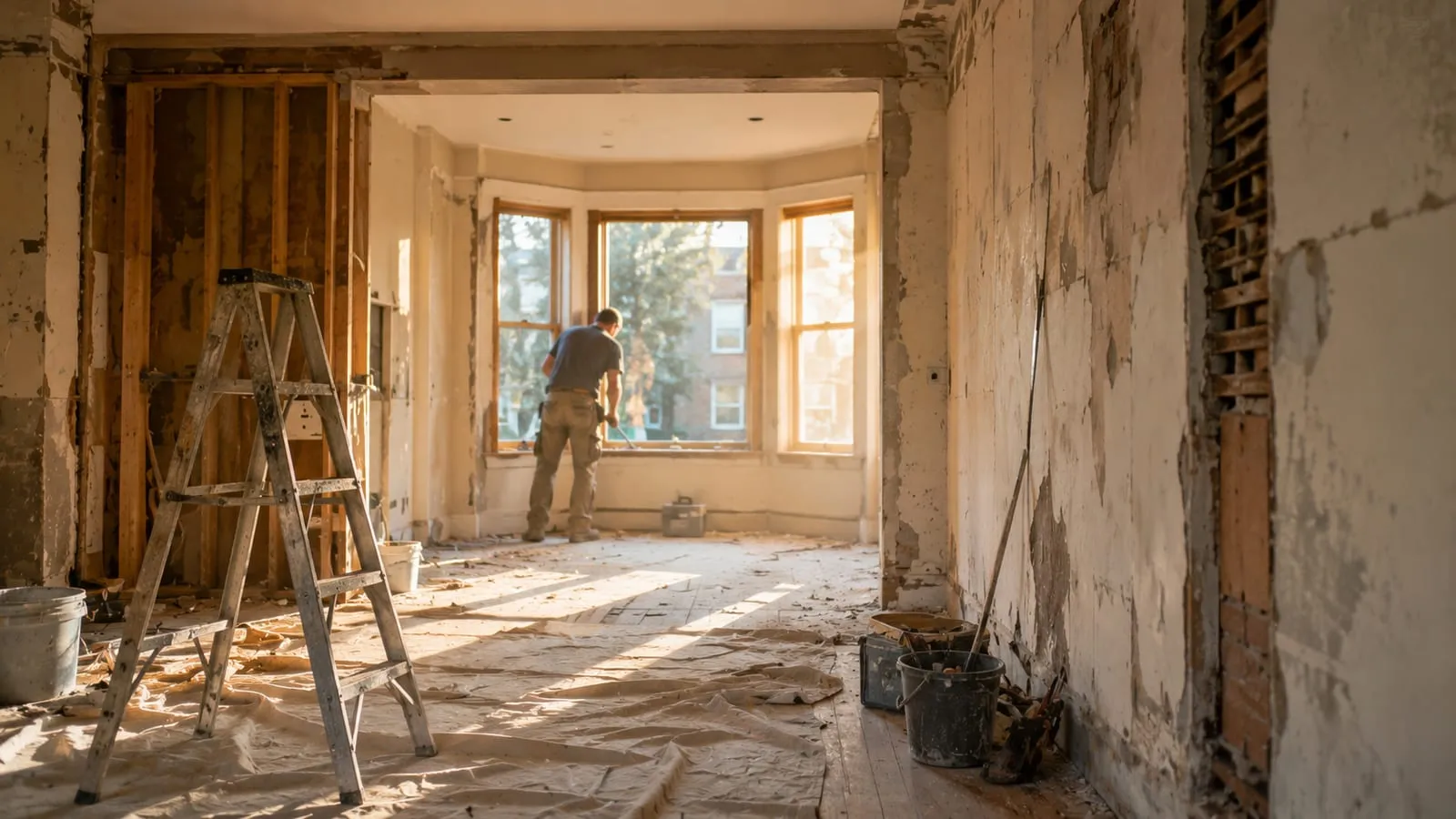
A true whole-house renovation is really two projects stacked on top of each other: the bones and the finishes.
- Demolition and debris removal.
- New electrical and plumbing — if the house is old enough to renovate, it’s usually old enough to rewire and repipe.
- Kitchen and bathrooms, which run the most expensive per square foot of any room.
- HVAC updates, new flooring, drywall, and paint.
- Floor-plan changes — removing walls or adding on — if you want them.
What drives the price
Four levers move the total more than anything else, and the first one is the one you have the least control over.
- Starting condition: aging systems, water damage, or code issues that only surface once demo begins — the classic budget-buster.
- Layout changes: moving walls and re-running systems behind them is where money disappears fast.
- Finish level: premium materials can double the budget on their own.
- Location: high-cost metros push you toward the top of every range.
Mistakes that blow the budget
Most blown budgets aren’t bad luck — they’re the same handful of avoidable decisions, made over and over.
- Choosing on price alone: a suspiciously low bid is almost always hiding missing line items or cheaper materials you’ll meet later.
- No itemized quote: refuse the one-page estimate. It should break out demo, framing, plumbing, electrical, and finishes so you can see what you’re buying.
- Changing the design mid-build: move a wall or a fixture after work starts and you set off a domino run of rework.
- No written scope/spec: without specific materials in writing, “extras” and change orders pile up until the final bill barely resembles the estimate.
- Skipping permits: starting without them risks fines or a stop-work order that freezes the whole job.
- No contingency: always hold back 15–20% for the surprises hiding behind the plaster.
How to save without cutting corners
The best savings come from planning, not from downgrading the parts that keep water out and current where it belongs.
- Do it in one project: it’s usually cheaper per square foot and far less disruptive than phasing it out over years.
- Reuse what’s still good — solid doors, trim, and fixtures don’t need replacing just because everything around them is.
- Bundle efficiency upgrades: if the house is already gutted, it’s the cheapest moment you’ll ever have to add a heat pump or a tub-to-shower conversion.
Renovation phases
A whole-house job moves in order, from the invisible work outward to the parts you’ll actually live with.
- Design, budget and permits.
- Demolition and debris removal.
- Systems (electrical, plumbing, HVAC).
- Framing, drywall and flooring.
- Cabinetry, fixtures, paint and finishes.
Frequently asked questions
How long does a whole-house renovation take?
A full renovation usually runs 2–4 months, depending on size and on how many surprises the demo turns up.
Do I need permits?
Yes — most whole-house renovations, especially anything electrical, plumbing, or structural, require them. Budget $300–$4,000 in fees.
Is it cheaper to renovate all at once?
Doing it in one project is usually cheaper per square foot and less disruptive — you pay once to set up, once to protect the house, once to clean up. The trade-off is a bigger upfront cost.
How do I avoid budget surprises?
Get an itemized quote naming specific materials, and set aside a 15–20% contingency for the things no one can price until the walls come off.
Can I negotiate the quote?
You can — but negotiate the finishes or the scope, not the critical items. Shaving money off electrical, plumbing, or waterproofing is how a cheap renovation becomes an expensive one.