Heat Pump with Radiant Floor vs Radiators: Which Performs Best
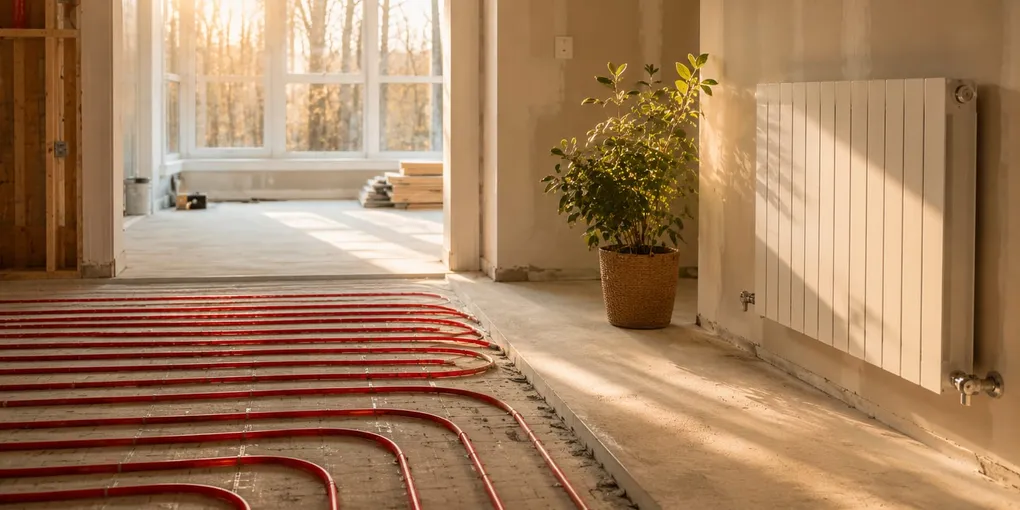
Bare feet on the kitchen tile in January, and the floor is warm — no cold shock, no huddling by a radiator, just even heat rising from underneath. That comfort isn’t only nice to feel; with a heat pump, it’s also the cheapest way to run. Pair an air-to-water (hydronic) heat pump with radiant floor heating and you get the best efficiency there is, because it runs on low-temperature water (85–105 °F / 30–40 °C) and reaches the highest COP. The radiant-floor-vs-radiators question still leaves radiators in the picture — heat pumps drive them fine, whether high-temperature units pushing water past 150 °F, or low-temperature radiators and fan coils (105–130 °F) that perform far better.
See the complete heat pump guide.
Why the emitter changes efficiency
A heat pump lives or dies on one gap: the distance between the outdoor air and the water temperature it has to produce. The lower that water temperature, the more efficient the whole system. That’s the physics behind the comfort — radiant floor sipping 85–95 °F water is unbeatable, while conventional high-temperature radiators demanding 140–170 °F force the pump to work harder and drag the COP down with them.

Efficiency by emitter type
The table lays out the trade-off every homeowner faces: the more efficient the emitter, the more disruptive it is to install.
| Emitter | Water temperature | Seasonal COP | Retrofit work | Summer cooling |
|---|---|---|---|---|
| Radiant floor | 85–105 °F | Excellent (4.5–5.1) | Very high | Yes (radiant) |
| Fan coils | 105–115 °F | High (~4.5) | Medium | Yes |
| Low-temp radiators | 105–130 °F | Medium-high (~3.8) | Low-medium | No |
| Conventional radiators | 140–170 °F | Low (~2.0–2.5) | None | No |
Read down the COP column and the pattern is clear: cooler water always means more heat per dollar.
Typical costs (USD)
The right emitter depends as much on your budget and whether you’re already tearing up floors as on the COP.
- New radiant floor: roughly $8–$15 per square foot installed, plus the flooring work on top.
- Keeping existing radiators + high-temp heat pump: the cheapest retrofit, since nobody has to open the floors.
- Switching to fan coils / low-temp radiators: a few thousand dollars more, bought back in efficiency over the years.
Comfort notes
Radiant floor keeps the surface below about 84 °F in living areas, which is warm to the foot without being hot. Its high thermal inertia is the catch and the gift: it’s slow to come up (12–24 h), but once it’s there it holds a steady, even temperature — which is exactly why it’s built to run continuously, not flicked on and off like a radiator.
Frequently asked questions
Can I reuse my existing radiators with a heat pump?
Yes — with a high-temperature (R290) air-to-water heat pump. The efficiency won’t touch radiant floor, but you skip the renovation entirely, which is often the deciding trade.
What is radiant cooling in summer?
It circulates cool water (around 60–65 °F) through the floor, cooling the room by radiation with no drafts and no noise. A dew-point sensor keeps the surface from dropping to where it would sweat.
Why do fan coils suit humid climates?
They run very cold water (45–55 °F) and actively dehumidify as they cool, which is what makes a muggy summer feel comfortable rather than just cooler.
Does radiant floor heat up quickly?
No — it’s built the opposite way. High inertia means it’s designed to hold a steady temperature over hours, not to switch on and off on demand.