Charging an Electric Car When You Rent or Have No Garage
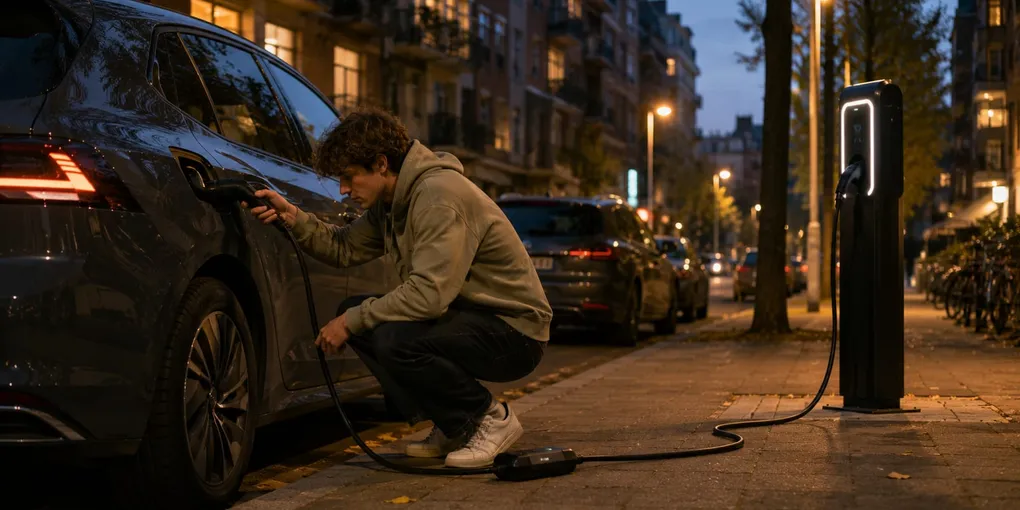
The day Marcus picked up his used EV, he realized he had nowhere to plug it in. He rents a third-floor walk-up and parks wherever there’s a spot on the street. His brother-in-law swore he’d made a mistake. He hadn’t. You can charge just fine without your own parking spot — you simply stop relying on a wall box and start stitching together two or three sources: one cheap, regular top-up (work, a neighborhood post, a rented space) plus slow outlet charging as your backup. Two months in, Marcus was charging cheaper than plenty of neighbors with their own garages.
The trick is to stop hunting for “my charger” and start thinking about “my charging routine.” Here’s where to begin.
Why your own wall box usually isn’t the answer here
First, drop one idea: without a fixed spot in your name, a hardwired home charger usually isn’t feasible, and it’s nobody’s fault.
To install a permanent Level 2 charger you need a space that’s yours or reserved for your exclusive use, a panel to wire it to, and — if you rent — the landlord’s sign-off to alter the property. If you park in a different curb space every night, there’s no wall to bolt anything to. And if the garage belongs to the building but no bay is assigned to you, same story: the right to install follows the parking space, not the tenant on its own.
Worth knowing: in several states a “right to charge” law protects renters and condo owners, giving you a path to install a charger on a space you control that a landlord or HOA can’t unreasonably block — they can set fair conditions, not a flat no. The real obstacle isn’t legal, it’s physical: not having a bay. If you rent one, the person to talk to is whoever owns that space, not the whole building. More on that below.
So unless you can lock down a steady spot, the strategy flips: instead of one outlet of your own, a well-chosen patchwork of other people’s chargers.
The four ways to charge without your own spot
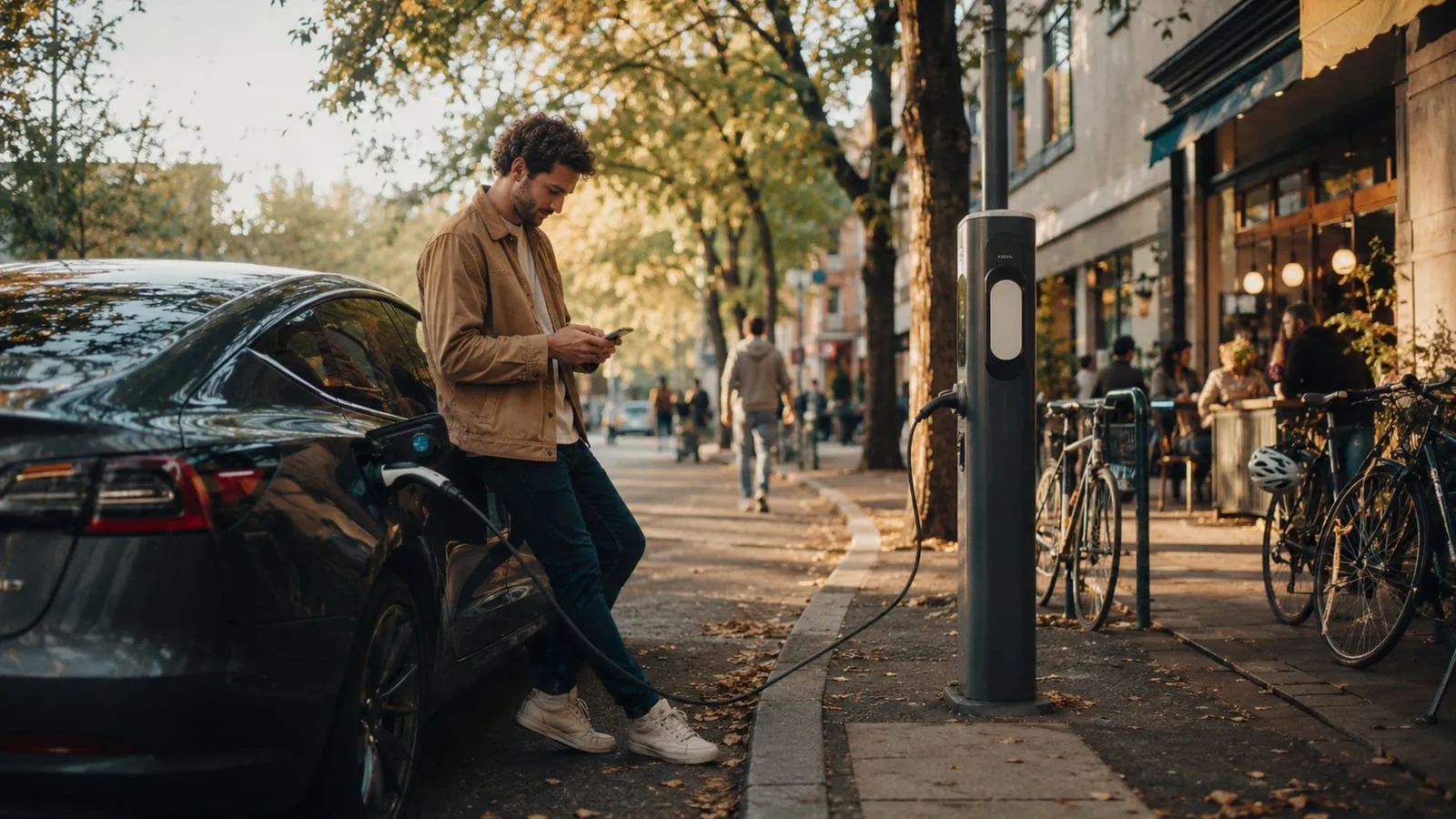
There’s no single right answer — there’s a combination that fits your life. Here are the four real sources, with the upside and downside of each, so you can see which one becomes your backbone and which is just a fallback.
| Option | For it | Against it | Best for |
|---|---|---|---|
| Rented space with your own charger | Almost like having a garage; cheap overnight charging; right to install | Depends on the owner; you pay to improve something that isn’t yours | Renters with a fixed bay planning to stay put |
| Workplace charging | Charge while you work; often free or very cheap | Not every employer has it; depends on your shift | Anyone who drives to the office daily |
| Neighborhood public Level 2 posts | No construction or permit; pay as you go | Have to find a free one; pricier than home; possible waits | People with a reliable post near home |
| Slow outlet charging | Any socket works in a pinch; zero investment | Very slow; needs the right cable and a safe outlet | An occasional backup, not your plan A |
Look at that last column: most people without a garage end up with two of these, not one. The usual mix is a cheap, predictable top-up (work or a rented space) plus an outlet or neighborhood post for the odd day.
One thing people overlook: you don’t need to charge every day. An average car does 20-25 miles a day and uses roughly 16-18 kWh per 100 km. On that, charging two or three times a week covers most people. That math changes everything, because suddenly a neighborhood post you visit a couple of evenings a week already sorts out your month.
What you can negotiate (and with whom)
This is where people give up too early. Half of these options hinge on a conversation that never happens.
If you rent a fixed bay, your counterpart is the owner of that space, not the building. It’s worth proposing a charger: some owners agree if you foot the bill and it stays as an upgrade, and a few even see it as a perk that makes the bay more attractive to future tenants. The conversation shifts if you offer to leave the install behind in exchange for a longer lease.
With your employer, the lever is that workplace charging is cheap to install and looks good; if several of you drive EVs, a joint request carries more weight than yours alone.
And if you rent a home that includes a parking space, check the lease: sometimes the use of the bay is already yours and you only need the landlord’s go-ahead for the install, which is hard to refuse without a real reason. I walk through the building-level process in installing a charger in a condo or HOA.

Common mistakes and tips from people who’ve solved it
After watching plenty of people go through this, the stumbles repeat:
- Ruling out an EV because you have no garage. That’s the root mistake. It works without your own spot — the routine is just different.
- Leaning on a regular outlet as plan A. Slow home charging is fine as a stopgap, but an outlet running at full tilt for hours gets warm, and not every old circuit is up to it. Use the right cable and treat it as a fallback, not a daily habit. I cover it in charging an EV from a regular outlet.
- Not checking the map before buying the car. Spend half an hour finding nearby Level 2 posts, checking prices, and seeing whether they’re actually available. That’s the difference between an easy routine and a queuing nightmare.
- Always paying drop-in rates. Many neighborhood posts charge far less if you sign up with their app or card than if you pay as a casual user. Five minutes of registration can halve the price.
- Forgetting fast charging for trips. With no base at home, road trips lean on highway DC fast chargers. They belong in the plan even if they aren’t your daily charge.
A note from experience: people who live without a garage and stay happy almost always have one reliable anchor — work or a bay — and use the rest as a safety net. The ones who struggle improvise every charge. Pick your anchor first; the rest falls into place around it.
Frequently asked questions
Can I own an electric car if I rent and have no garage?
Yes. A dedicated home charger usually isn’t feasible without a fixed spot, but you can combine workplace charging, neighborhood public posts, a rented space with your own charger, or slow outlet charging as backup. Charging two or three times a week is enough for average use.
Do I have the right to install a charger as a renter?
The right to install follows exclusive use of a parking space, not ownership. In several states a right-to-charge law backs renters who control a bay. If your lease includes an exclusive space, you have a path to install — and it’s smart to get the landlord’s written sign-off too.
Is it safe to charge from a regular outlet every day?
As an occasional backup, yes, but it’s not ideal as a daily plan. Slow charging keeps the outlet working for many hours straight, and an older circuit can overheat. Always use a cable with built-in protection, and if it’ll be routine, consider a dedicated outlet checked by an electrician.
Is charging on the street more expensive than at home?
Usually, because public posts bundle the service and lack the cheap overnight home rate. Even so, signing up with the operator’s app and charging in low-cost windows narrows the gap a lot — and it still beats filling up on gasoline.
What if I get a fixed spot later?
Then everything changes: with a space for your exclusive use, even a rented one, you can install your own charger and switch to cheap overnight charging. That’s the jump that saves the most, so if a steady bay is within reach, it’s the option to chase.