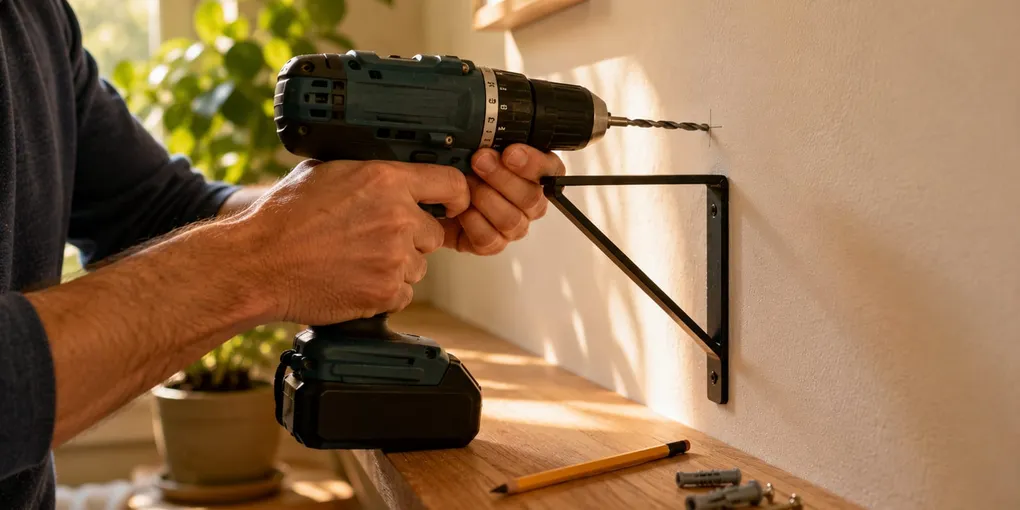
The thing that makes people hesitate with a drill in their hand isn’t the tool — it’s what they can’t see. Somewhere behind that patch of paint could be a live wire or a water pipe, and you won’t know until the bit finds it. Learn to read the wall first and that fear goes away, because you’re no longer drilling blind. The key to hanging something that holds is matching the bit and the anchor to the wall type, and knowing what’s behind before you drill. The same anchor that grips concrete pulls straight out of a hollow partition, and a hole in the wrong spot can find a cable. Here’s how to drill into a wall the right way — no wrecked plaster, no shock.
1. Identify the wall type
Before anything else, figure out what you’re drilling into — it decides the bit, the mode, and the anchor all at once.
- Hollow partition (hollow brick/block): the most common interior wall. A few knocks sound hollow.
- Solid brick or concrete: sounds solid and drills hard; needs hammer mode.
- Drywall (plasterboard): a thin board with a cavity behind it; sounds hollow and gives easily.
- Tile: hard and brittle; drill without hammer mode or it cracks.
Trick: knock with your knuckles. Hollow means partition or drywall; a dull, solid thud means brick or concrete.
2. Choose the right bit
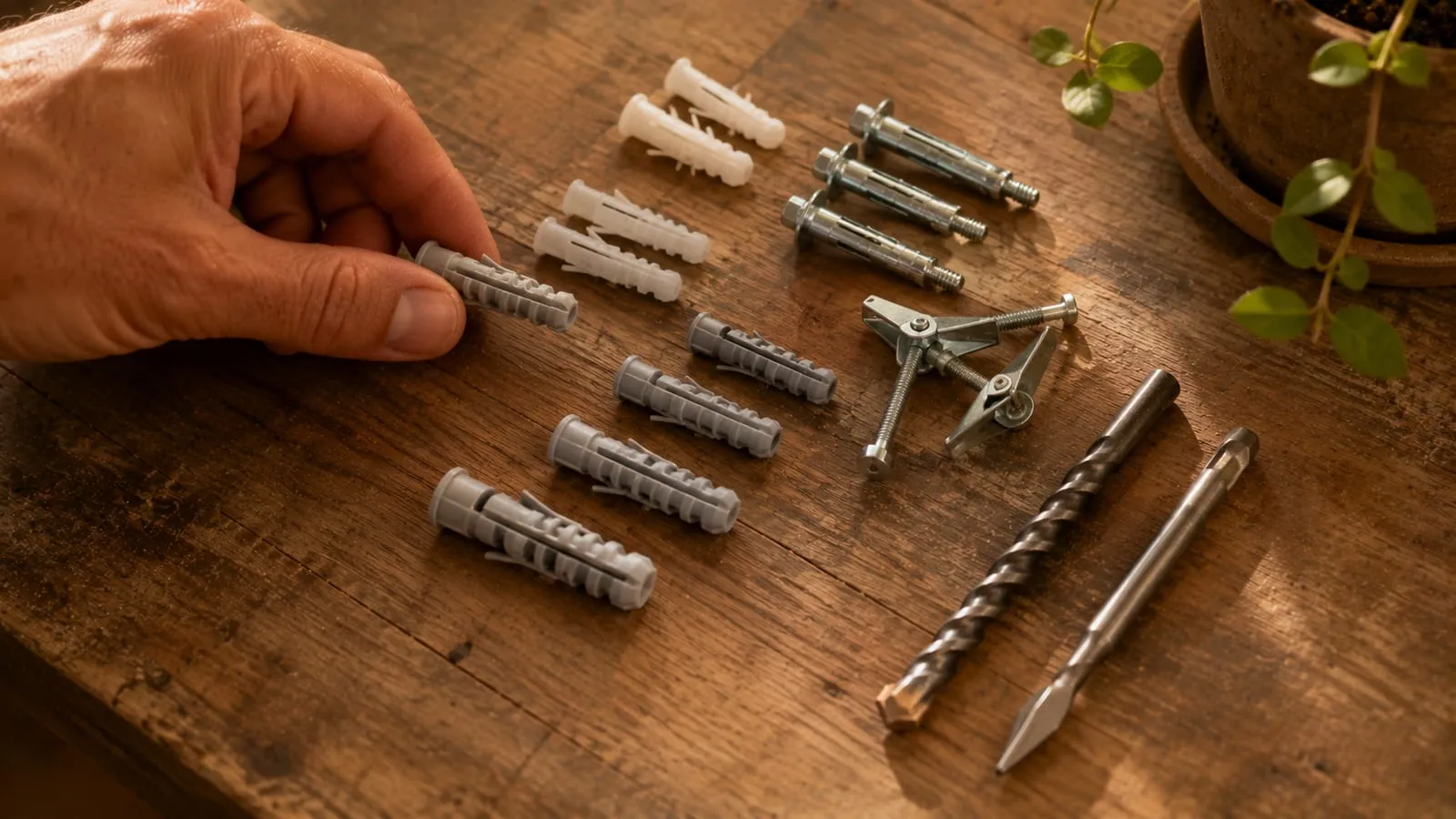
The bit has to match the material, not just the hole size — the wrong one skates, overheats, or shatters the surface.
- Masonry bit (for hammer drilling): for brick and concrete.
- Metal (HSS) bit: for drywall and metal studs.
- Tile/glass bit (spear point): for ceramic, always without hammer mode.
- The bit diameter matches the anchor diameter — a 6 mm anchor takes a 6 mm bit, no rounding up.
3. Choose the anchor for the wall and the weight
Two questions set the anchor: what the wall is made of, and how much the thing weighs.
- Universal expansion anchor (nylon): solid walls and everyday loads.
- Hollow-wall anchor (metal toggle or self-drilling): non-negotiable in drywall and hollow partitions — an expansion anchor in a hollow wall has nothing to expand against and simply pulls out.
- Chemical anchor or threaded rod: for heavy loads — TVs, loaded shelves, radiators.
Get both halves right — the wall type and the weight — and the anchor does its job invisibly.
4. Before drilling: avoid wires and pipes
This is the step that turns fear into confidence. Don’t drill directly above, below, or beside outlets and switches: wires typically run straight up, down, or across from them, so those are the danger zones. If you’re not sure, run a cable and pipe detector over the spot first. Thirty seconds here is what prevents the shock, the burst pipe, and the blackout.
5. Drill with technique
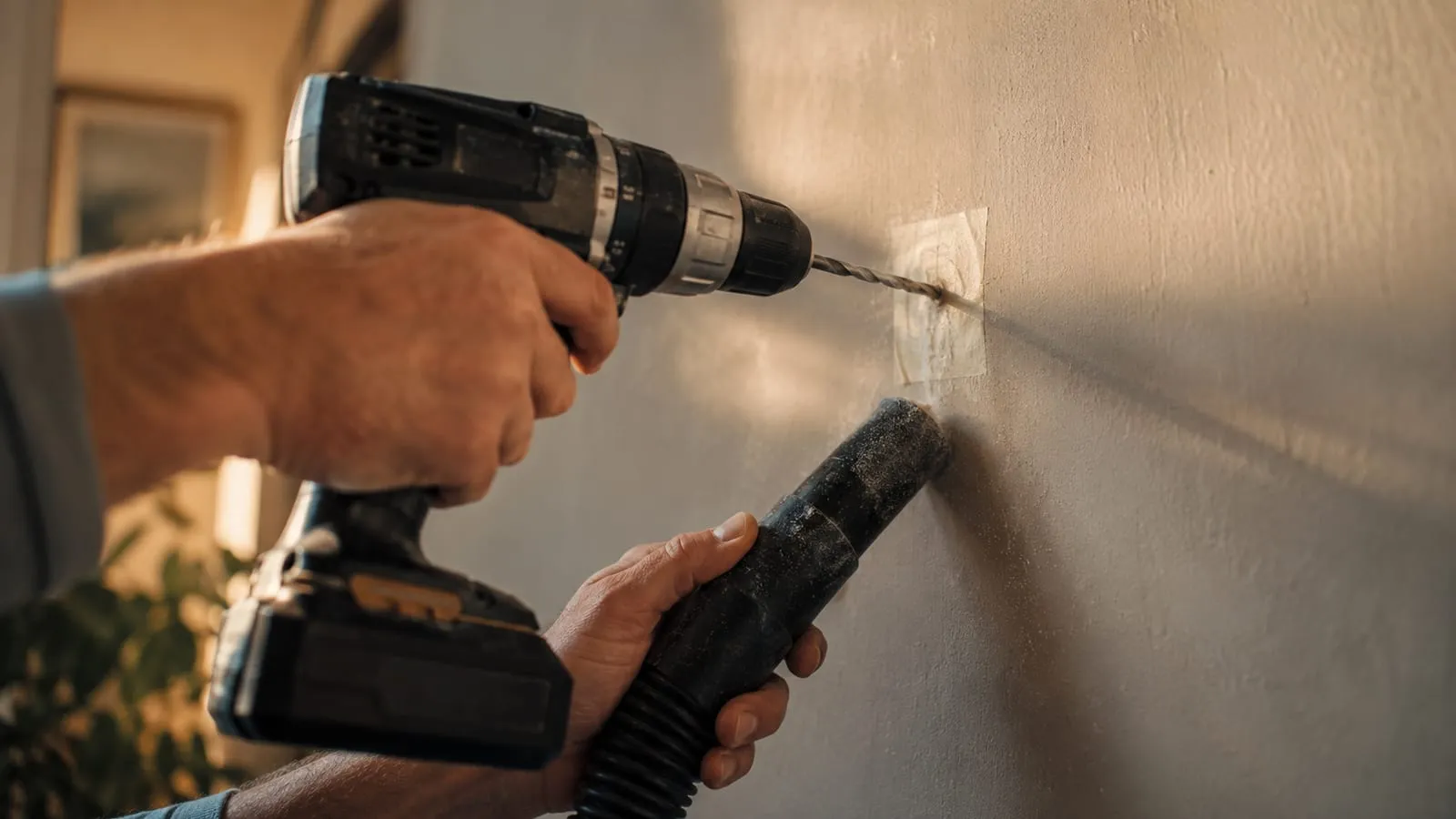
Good technique is what separates a clean hole from a chipped, wandering mess.
- Mark the spot with a pencil; for a row of holes, use a level.
- Stick a piece of masking tape over the mark: the bit won’t wander, and the tape catches the dust. On tile it does double duty — it stops the glaze cracking and gives the bit something to bite so it doesn’t skid off.
- Drill straight (90°) and start slow. Hammer mode ON for brick and concrete; OFF for drywall and tile — on tile, keep it off until you’re through the glaze.
- Control the depth: wrap tape around the bit at the anchor length so you can’t overshoot.
- Catch the dust: hold a vacuum nozzle just under the hole as you drill.
6. Insert the anchor and hang
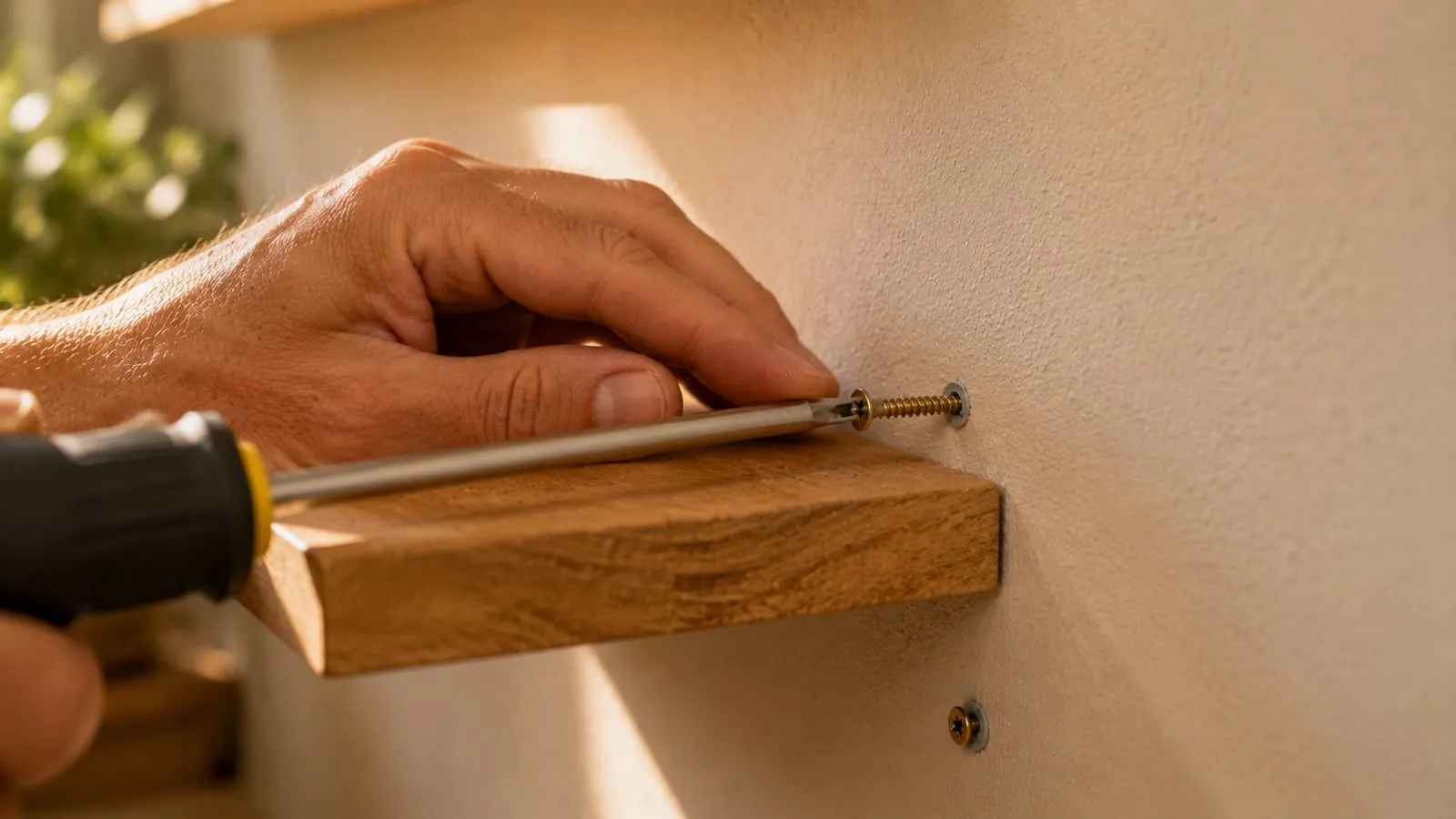
The hole is only half the job — how you seat the anchor decides whether it holds.
- Blow or vacuum out the dust; a clean hole grips better than a dusty one.
- Push the anchor in until it’s flush, tapping it gently home.
- Drive the screw, leaving a few millimeters proud if you’re hanging from a hook or bracket.
Pro tricks
- Knock on the wall to tell hollow from solid before you pick an anchor — the cheapest test there is.
- Tape over the mark: the bit won’t dance, it catches dust, and on tile it prevents cracks.
- A tape flag on the bit as a depth stop.
- Vacuum under the hole: zero mess on the wall and floor.
- Hammer mode OFF on tile and drywall; ON only for brick and concrete.
- Something heavy — TV, mirror, big shelf: spread the load over two points, use the right anchors (or chemical), and in drywall aim for a stud whenever you can.
Common mistakes
- Expansion anchor in a hollow wall: nothing to grip, so it pulls out.
- Hammer mode on tile: it cracks.
- A bit that doesn’t match the anchor: either loose in the hole or it won’t seat.
- Drilling near an outlet: the classic way to find a wire the hard way.
- A screw that’s too short: the anchor never expands, so it never holds.
Frequently asked questions
Which bit for tile?
A spear-point tile/glass bit, hammer mode off, starting slowly through the glaze.
How do I tell if a wall is hollow or solid?
Knock with your knuckles: a hollow ring means partition or drywall; a solid thud means brick or concrete.
What anchor for drywall?
A metal toggle or self-drilling hollow-wall anchor — expansion plugs have nothing to bite and won’t hold.
How do I hang something heavy without it falling?
Spread it over two points, use anchors rated for the weight (or chemical), and in a hollow wall find a stud or reach for toggle anchors.
What if I drill in the wrong spot?
No harm done: learn to patch the hole and start over an inch to the side.