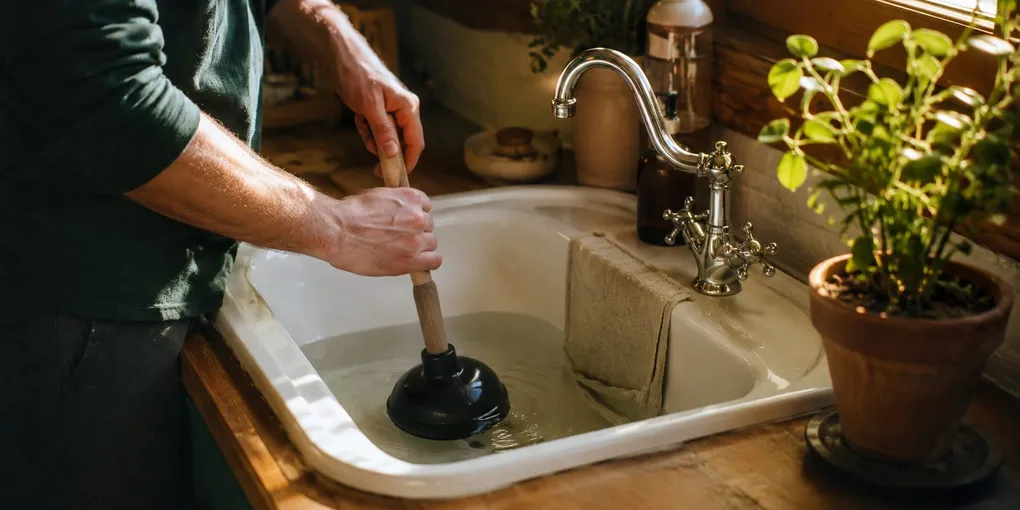
It’s late, the sink is full of gray water that isn’t going anywhere, and your first instinct is the bottle of drain cleaner under the counter. Put it back. That’s the move that turns a ten-minute fix into a damaged pipe and a caustic mess you still have to clear. Most sink, bathroom, and shower clogs can be cleared at home with hot water, a plunger, or by cleaning the trap — no chemicals needed. The trick to unclog a drain fast is to work in order, gentlest method first, and stop the moment the water runs. Here are the methods that actually work, the ones worth skipping, and how to keep it from happening again.
Methods, from gentlest to strongest
Work down this list in order. Nine times out of ten you never reach the bottom of it.
- Hot water + dish soap: for grease clogs. Pour very hot water — not boiling if your pipes are PVC — with a squirt of dish soap, and give it a few minutes to melt the fat loose.
- Baking soda and vinegar: half a cup of baking soda, then the vinegar, wait 15–30 minutes, and flush with hot water. Fine for maintenance and mild clogs; useless against a solid blockage, whatever the internet says.
- Plunger (cup plunger): fill the basin until water covers the cup, block the overflow with a wet rag, and plunge firmly several times.
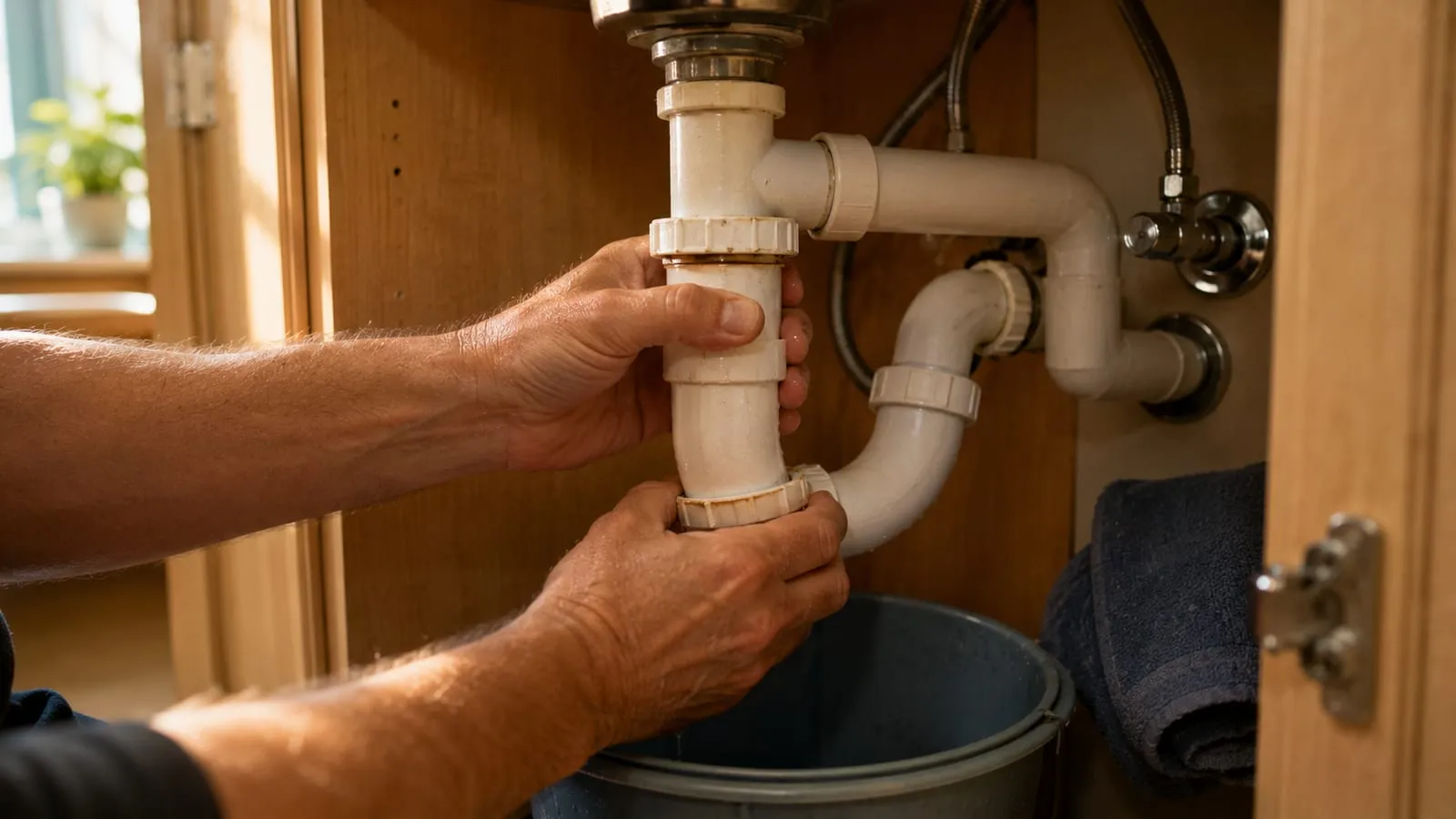
- Clean the trap (P-trap): set a bucket underneath, unscrew the trap, and pull out the wad of hair and grease. This alone solves about 80% of sink and bathroom clogs — it’s usually the fastest fix, not the last resort.
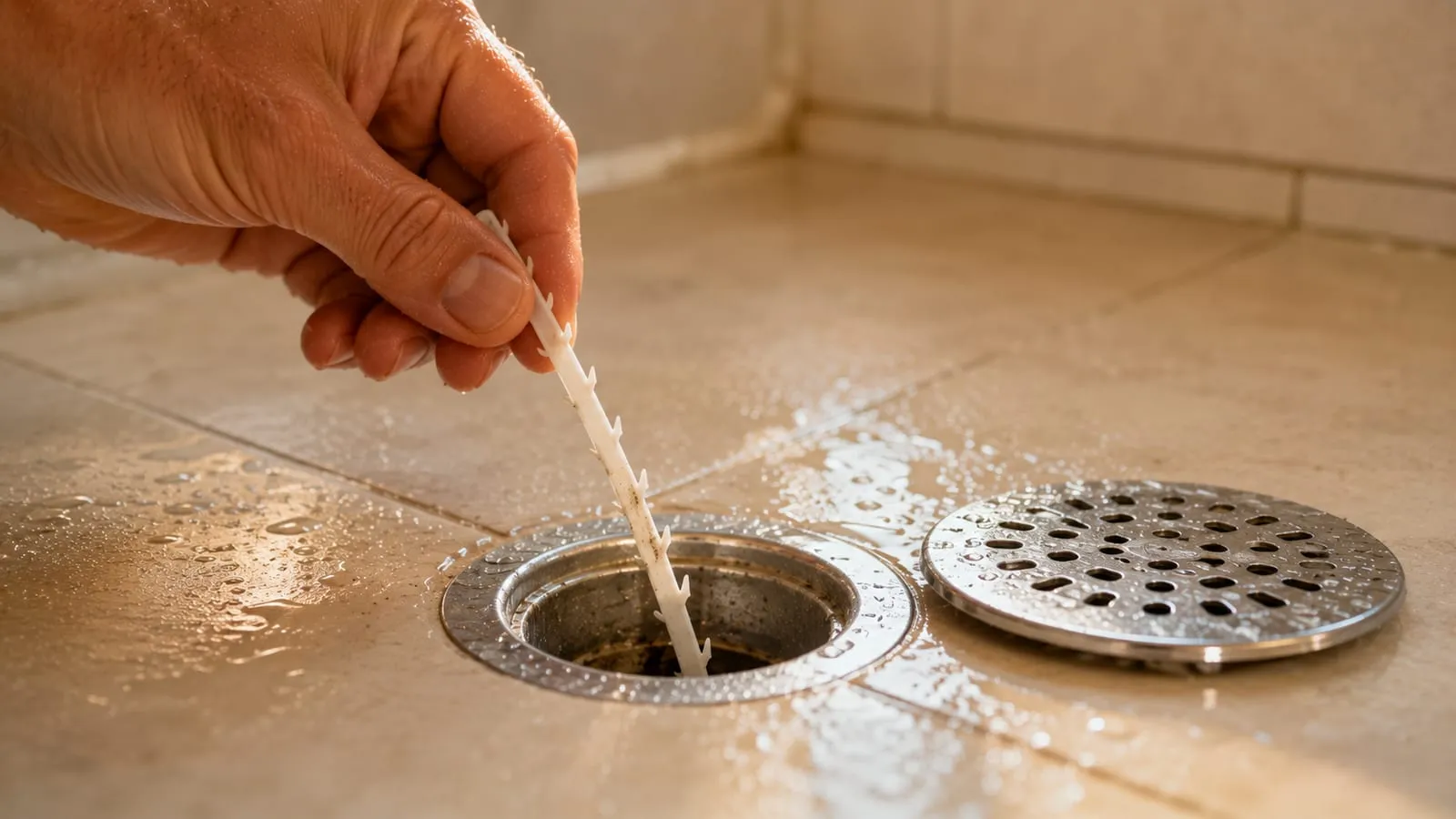
- Drain snake or auger: for deeper blockages, feed a plumber’s snake in while turning it; in the shower, a barbed plastic strip drags hair straight back out.
- Wet/dry vacuum: on the liquid setting, it can pull the clog back up out of the drain.
Tricks that make the difference
A few small moves are what separate a plunger that works from one that just splashes.
- Always block the overflow when you plunge — leave it open and the pressure escapes out the top instead of down the drain.
- A smear of petroleum jelly on the plunger rim improves the seal and the suction.
- For hair, the barbed plastic strip beats any chemical, and costs a couple of dollars.
- Start at the trap on sinks and basins: it’s usually the fastest, cleanest fix there is.
- Hot water for grease — but if your pipes are PVC, use hot tap water, not boiling, or you can warp the joints.
What to avoid
- Chemical drain cleaners (lye/caustic): they eat at pipes and seals, they’re dangerous to handle, and against a total blockage they just pool on top and do nothing. Keep them as a last resort, or skip them altogether.
- Mixing chemical products: it can throw off toxic fumes.
- Plunging after pouring in chemicals: you’re begging for a caustic splashback in your face.
How to prevent clogs
- Fit a strainer or hair catcher over the drain — the cheapest insurance there is.
- Never pour oil or grease down the sink; it cools, hardens, and lines the pipe like plaque.
- Run hot water for a few seconds after each use to flush the day’s residue through.
- Once a week, a maintenance dose of baking soda + hot water.
When to call a pro
If several drains back up at once, dirty water rises somewhere it shouldn’t, or you catch a whiff of sewage, the clog isn’t in your trap — it’s in the main line or the stack. That’s plumbing you don’t reach with a plunger, and the point where a pro earns their fee.
Frequently asked questions
Does baking soda and vinegar work?
For mild clogs and routine maintenance, yes. Against a solid blockage, the fizz looks impressive and does almost nothing.
Can I use a chemical drain cleaner?
Better to avoid it — it damages pipes, it’s dangerous, and it fails outright when the clog is total. Try the plunger and the trap first; they solve most jobs.
How do I unclog a shower drain?
It’s almost always hair. Pop off the grate and pull the clog out with a barbed plastic strip or a snake — no chemicals required.
Water drains but it smells — why?
Usually a dirty or dry trap with no water left to seal it. Clean it out and run water to refill the seal, and the smell goes with it.